Why test TMT bars
Reinforcement steel is the part of a structure you can’t inspect after the pour. Bars bought on the strength of a mill certificate are sometimes a lower grade, from a different heat, or simply not what the bundle tag claims. Independent testing to IS 1786 before use is required on most government and infrastructure projects, and is good practice on any building.
The tests in an IS 1786 report
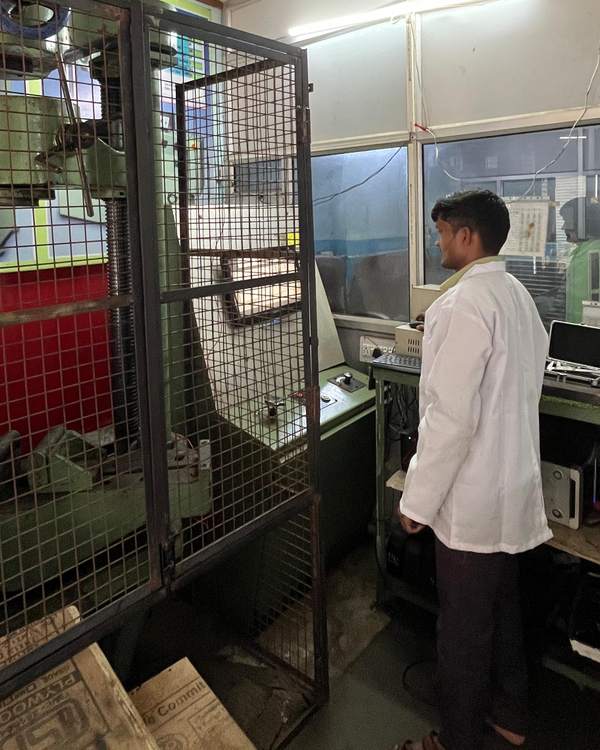
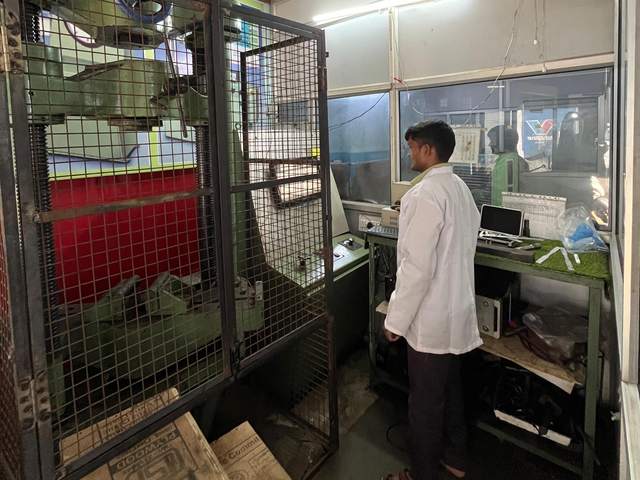
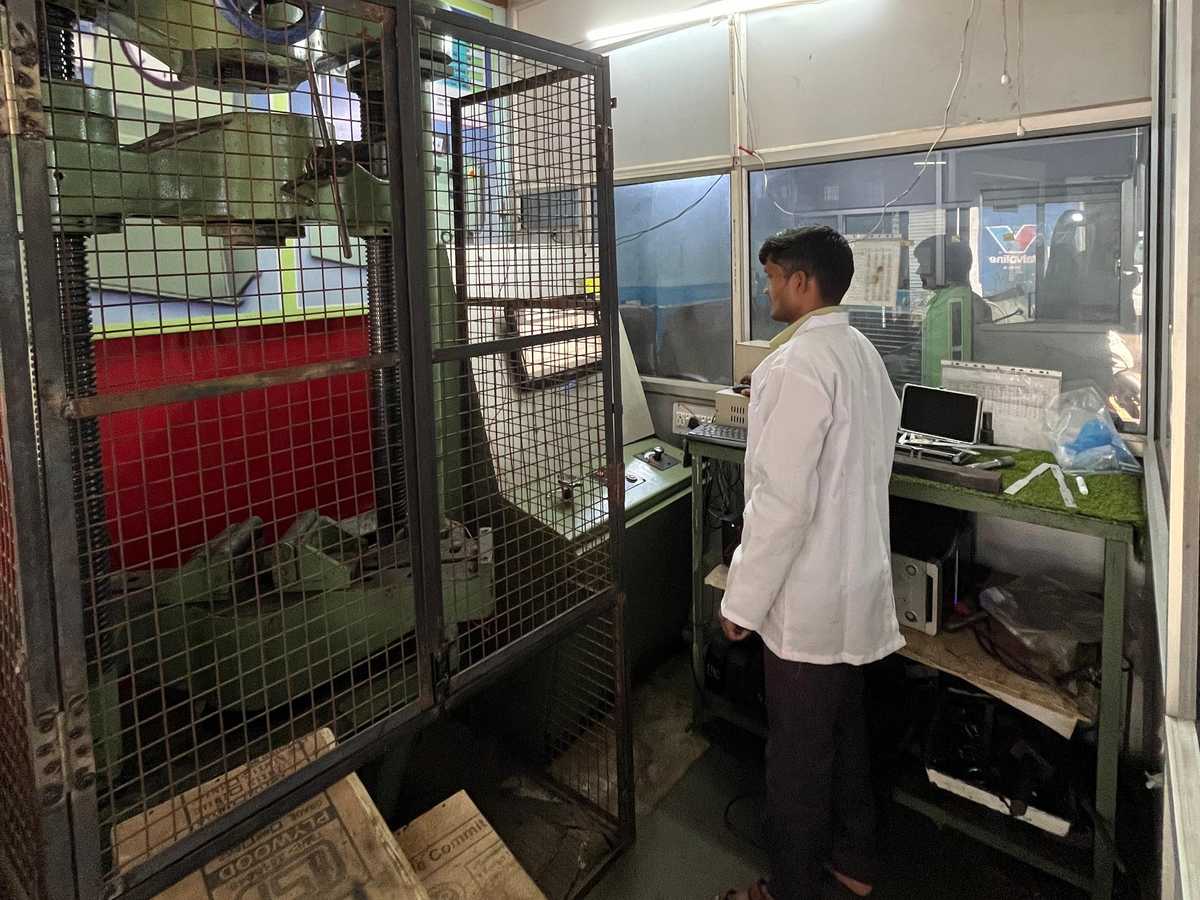
Tensile test. A full-section bar is pulled to failure on a universal testing machine. We report the 0.2% proof stress (or yield stress), tensile strength, the ratio between them and the elongation. See tensile testing.
Bend and rebend. The bar is bent around a mandrel of specified diameter, and in the rebend test bent back after ageing. It must show no cracks. This checks ductility under the kind of bending done on site.
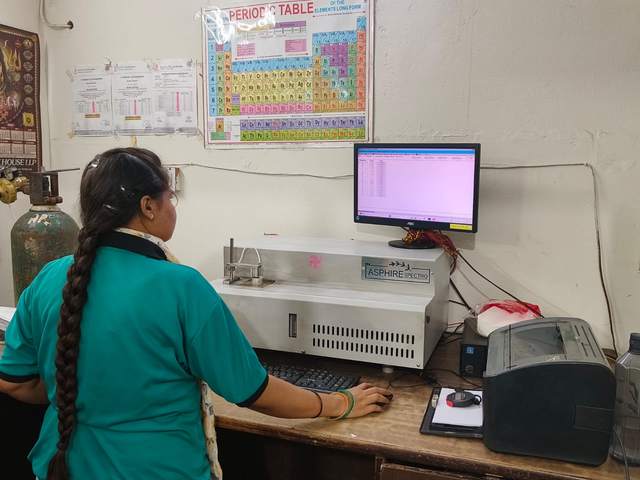
Chemical composition. Carbon, sulphur and phosphorus are measured, usually by spectro analysis, and compared with the IS 1786 limits for the grade. Excess carbon hurts weldability. Excess sulphur and phosphorus make bars brittle.
Ductile “D” grades
Grades ending in D (Fe 415D, Fe 500D, Fe 550D) are specified for structures in seismic zones because they deform more before breaking. When the drawings call for a D grade, make sure the test report states conformity to that grade, not just to the base grade.
Testing concrete too?
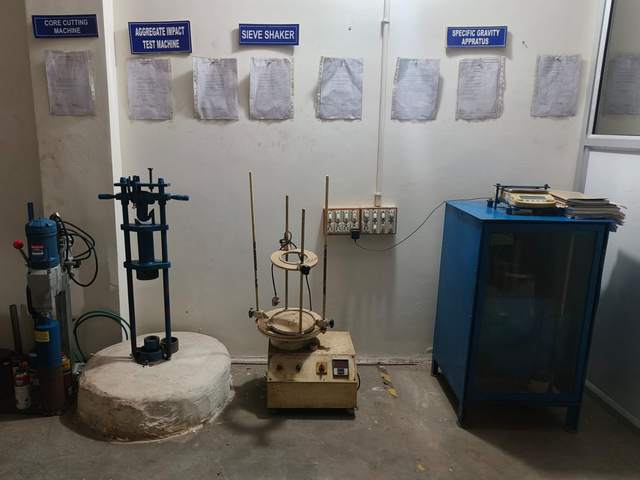
Most site QA plans test steel and concrete together. We also test concrete cubes and cores and cement, so you can send everything in one go.
Last reviewed: