Why check chemical composition
Two bars can look identical and behave very differently. A few hundredths of a percent more carbon, or a missing alloying element, changes how steel responds to heat treatment and welding. Spectro analysis is the quickest way to confirm that the material you received is the grade you paid for.
Common reasons customers send samples:
- Mill certificate verification for incoming steel and castings
- Grade identification of unmarked stock or mixed-up material
- Failure investigation, where the wrong material is a frequent root cause
- Heat treatment planning, as carbon and alloy content decide hardenability
- TMT bars, where IS 1786 limits carbon, sulphur and phosphorus. See TMT bar testing
How the analysis is done
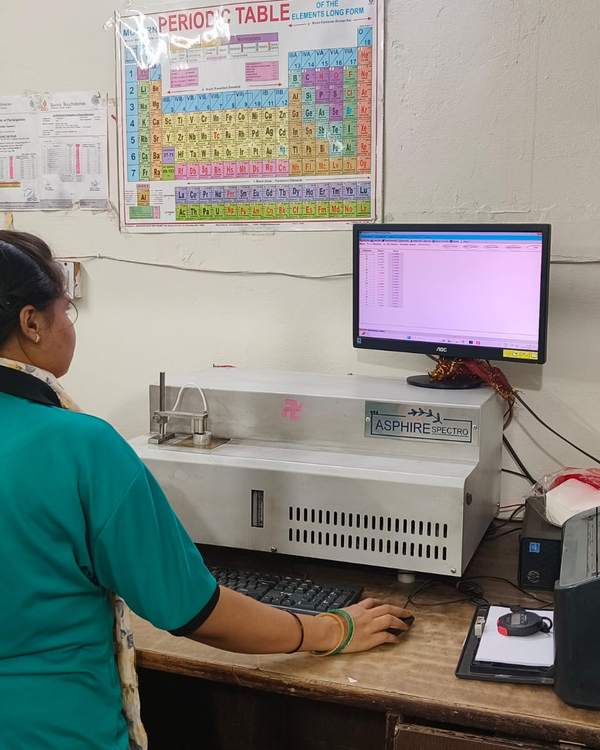
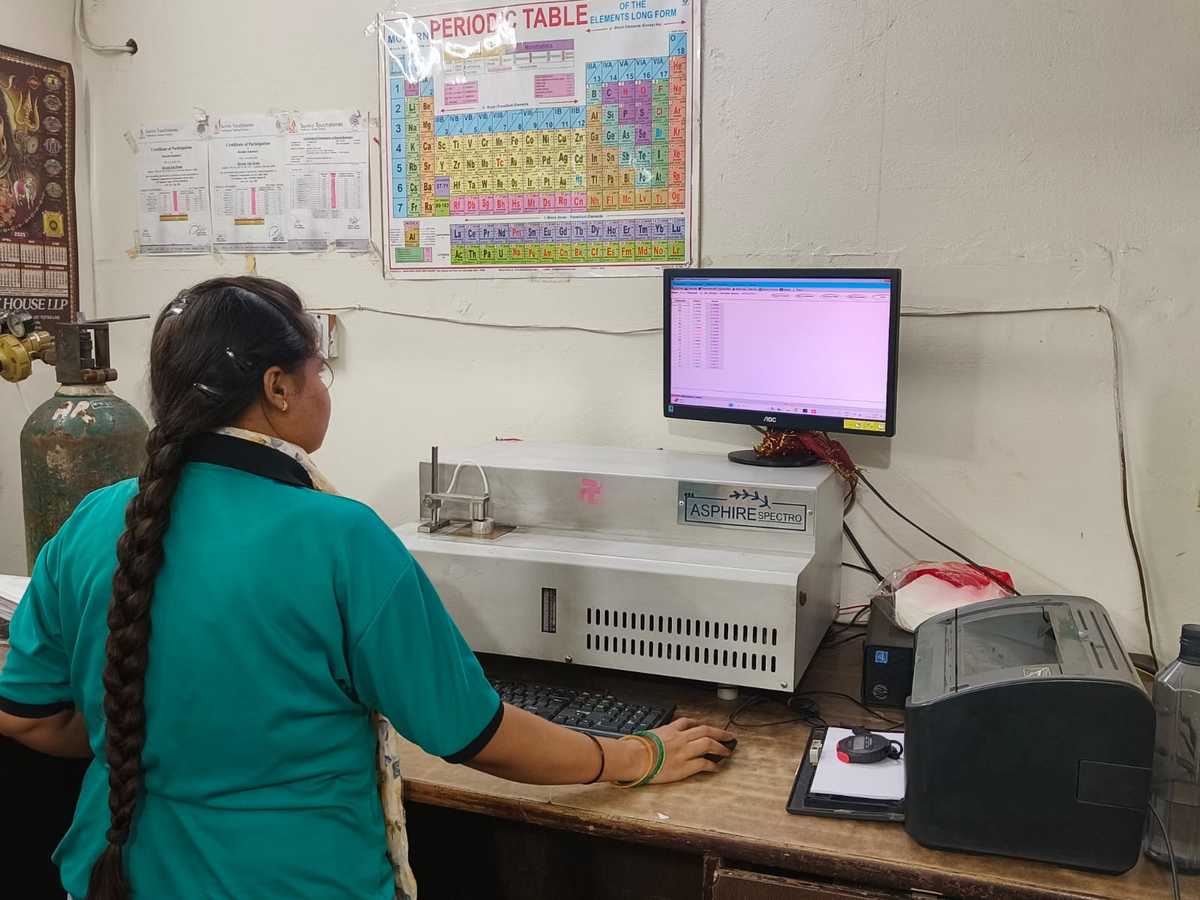
- Preparation. The sample is cut and ground to a clean, flat surface.
- Sparking. Several sparks are taken at different spots and averaged.
- Reporting. The composition is reported element by element and compared with the limits of the grade you name.
For elements OES can’t measure at the level you need, or for non-metallic materials, our chemical testing lab uses ICP and wet-chemistry methods.
Last reviewed: