Why test TMT bars
Reinforcement steel carries the tension in every beam, slab and column. A bar that is under strength, too brittle to bend, or outside its chemistry limits weakens the structure in a way no one can see after the concrete is poured. Independent testing before use protects the builder, the consultant and the owner.
Mechanical properties
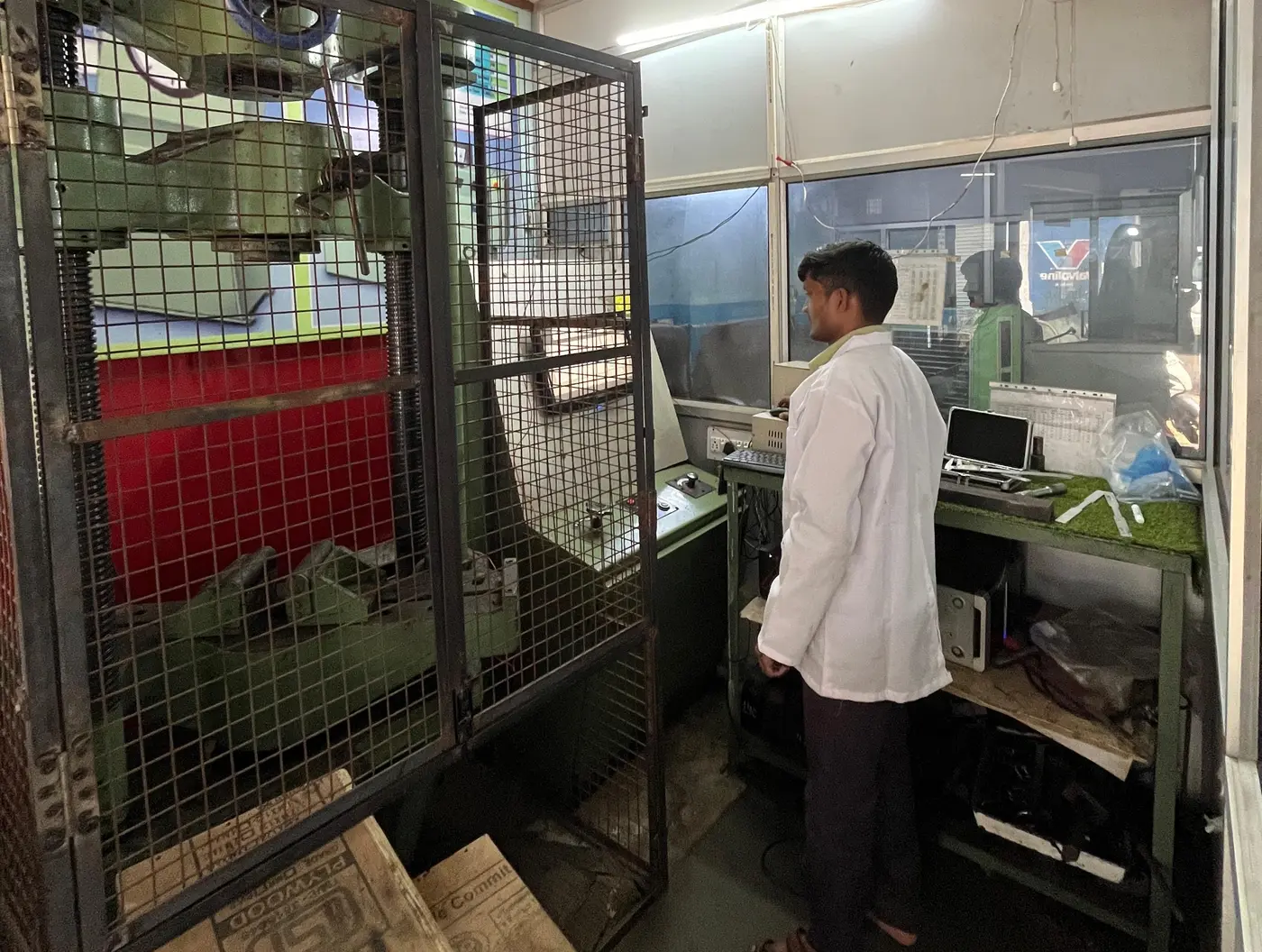
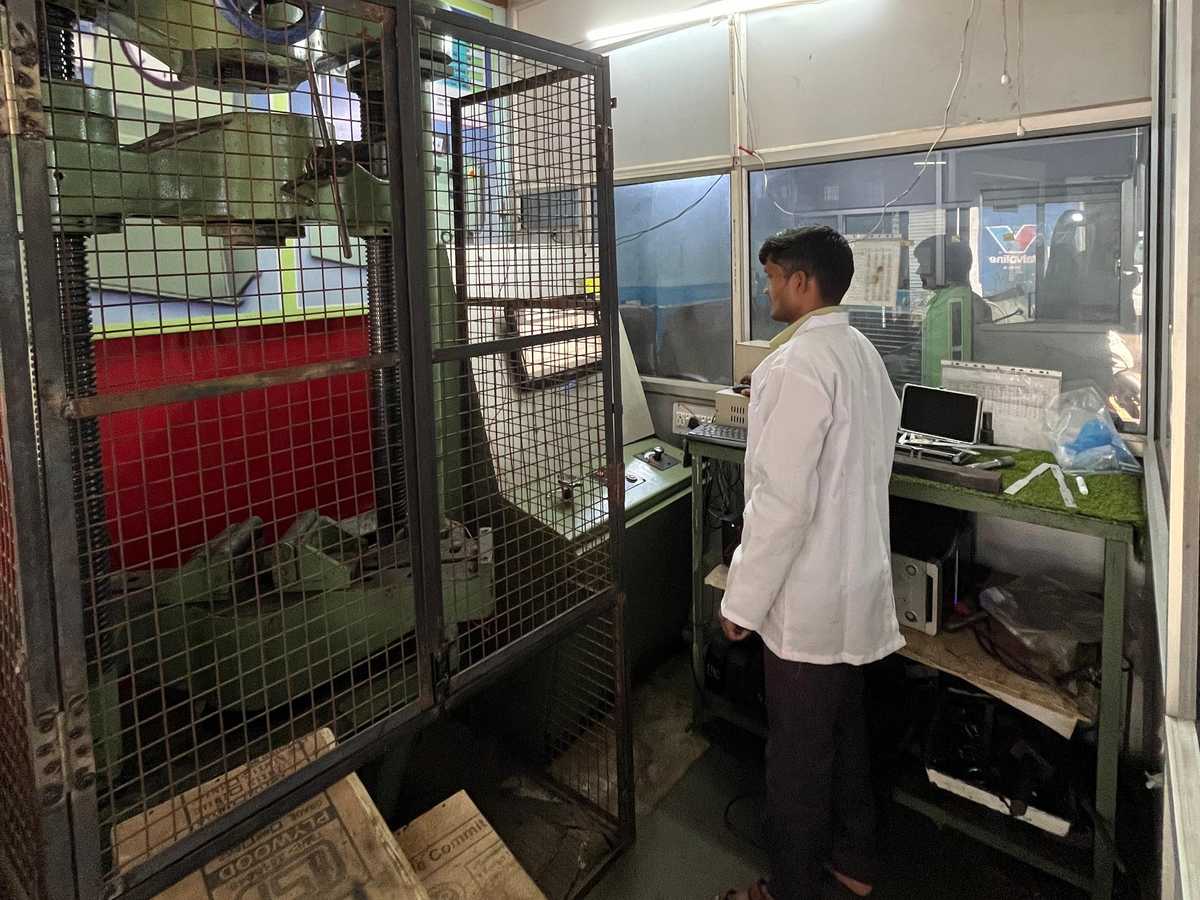
On our universal testing machine each specimen is pulled to failure to measure:
- Tensile strength — the maximum stress the bar withstands.
- 0.2% proof stress / yield stress — the stress at which the bar starts to deform permanently, which defines its grade.
- Elongation — how far the bar stretches before breaking; a measure of ductility, essential for seismic performance.
The ratio of tensile strength to yield stress is reported against the minimum for the grade. See mechanical testing for our full range of load tests.
Bend and rebend
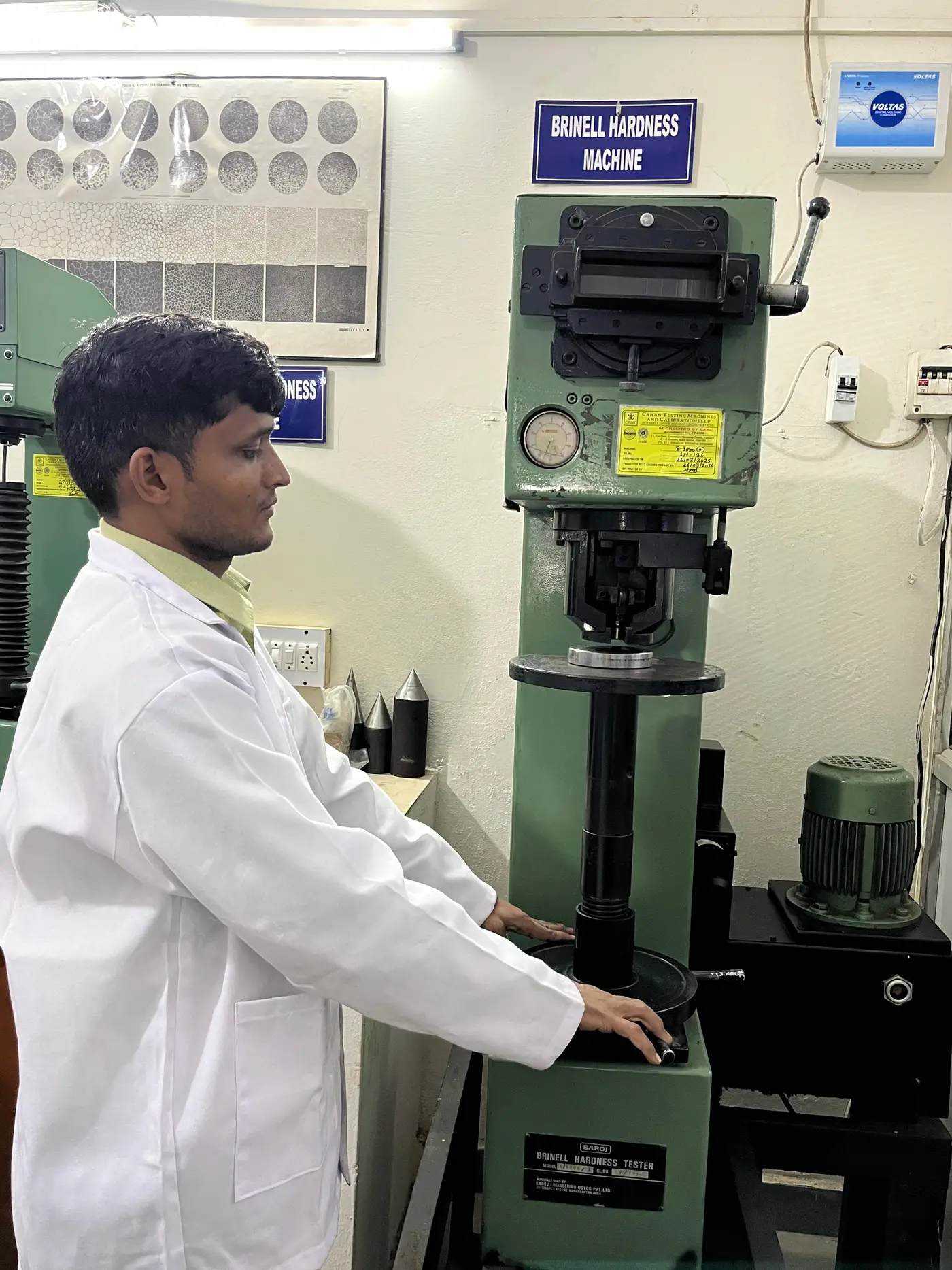
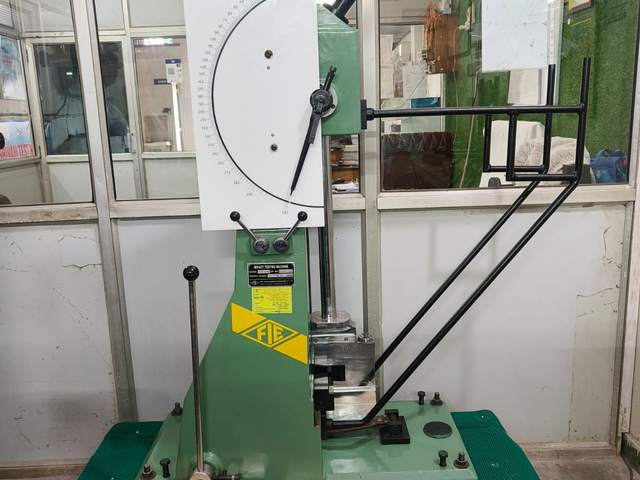
The bend test bends the bar around a mandrel to check it does not crack. The rebend test bends it, ages it, and bends it back, simulating site bending and straightening. Both confirm the bar can be safely bent on site.
Chemical composition
Carbon, sulphur and phosphorus are measured on our OES spectrometer. High sulphur or phosphorus makes steel brittle and difficult to weld, so these limits matter as much as strength. Our chemical testing team runs the analysis in-house.
Part of your building material programme
TMT results sit alongside cement and concrete tests in one set of reports. See the building material testing hub for the full list.
Last reviewed: